This iterator goes through each node. Its usage is quite simple, for example you can count the number of nodes in digraph g of type Digraph like this:
          int count=0;
          for (Digraph::NodeIt n(g); n!=INVALID; ++n) ++count;
#include <lemon/concepts/digraph.h>
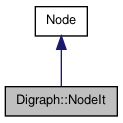
 Inheritance diagram for Digraph::NodeIt:
Public Member Functions | |
| NodeIt () | |
| Default constructor. | |
| NodeIt (const NodeIt &n) | |
| NodeIt (Invalid) | |
| Invalid constructor & conversion. | |
| NodeIt (const Digraph &) | |
| Sets the iterator to the first node. | |
| NodeIt (const Digraph &, const Node &) | |
| Node -> NodeIt conversion. | |
| NodeIt & | operator++ () |
| Next node. | |
| NodeIt | ( | ) | [inline] |
Initialize the iterator to be invalid.
Sets the iterator to the node of the digraph pointed by the trivial iterator. This feature necessitates that each time we iterate the arc-set, the iteration order is the same.
| NodeIt& operator++ | ( | ) | [inline] |
Assign the iterator to the next node.
 1.7.3
1.7.3